
Dental Implants in Virginia Beach, VA
Permanent Tooth Replacement Designed for Strength, Stability, and Confidence
Missing teeth can affect how you eat, speak, smile, and feel in everyday situations. Dental implants in Virginia Beach, VA provide a stable, natural-looking way to replace missing teeth and restore comfortable function.
A dental implant replaces the foundation of a missing tooth with a small implant placed in the jawbone and a custom restoration above it. For appropriate patients, implants can replace a missing tooth without relying on a removable appliance or neighboring teeth for support.
At Indian River Dental, Dr. Raymond Gozon provides personalized implant care focused on careful planning, patient comfort, clear communication, and long-term oral health.
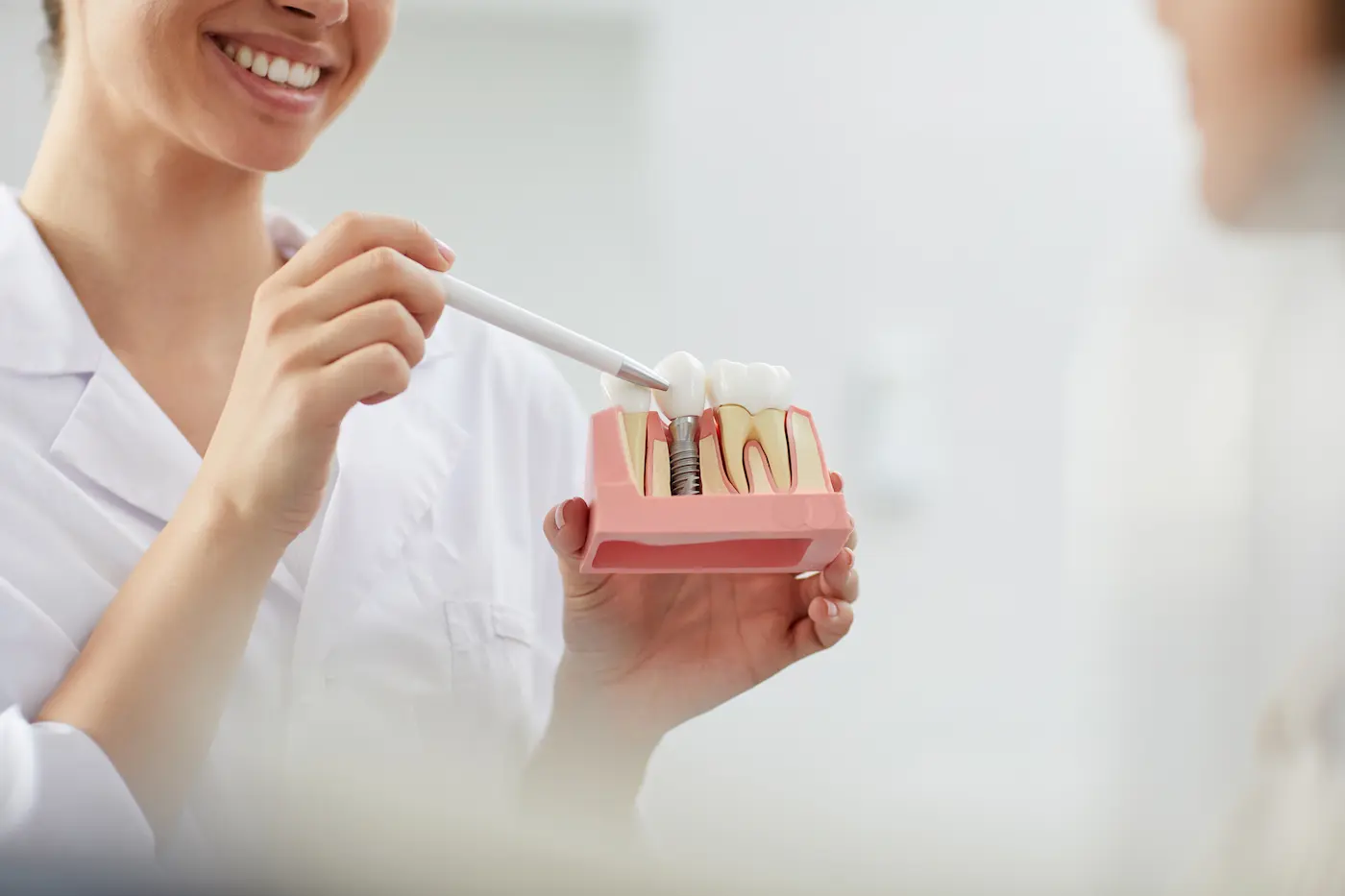

What Are Dental Implants?
Dental implants are fixed tooth-replacement solutions designed to replace missing teeth from the root upward.
A typical single-tooth implant includes:
- Dental implant: A biocompatible post positioned in the jawbone
- Abutment: The connector between the implant and replacement tooth
- Restoration: The visible tooth designed to match your smile and bite
After implant placement, the surrounding jawbone gradually heals around the implant. This creates a strong foundation that helps the restored tooth feel secure when you bite and chew.
Unlike a traditional dental bridge, an implant can often replace a missing tooth independently rather than relying on neighboring teeth for support.
Dental implants are part of the comprehensive implant and surgical dentistry services available at Indian River Dental.
How Can Dental Implants Improve Your Daily Life?
Replacing a missing tooth is about more than closing a gap. A well-planned implant can improve comfort, function, appearance, and confidence.
Eat More Comfortably
Missing teeth can make certain foods difficult to chew. Once an implant has healed and been restored, it can provide a stable chewing surface for everyday meals.
Smile With Confidence
A visible missing tooth can make some people hesitant to smile or speak freely. Implant restorations are designed to blend naturally with the surrounding teeth.
Enjoy a Fixed Tooth Replacement
Dental implants are anchored in the jawbone. For appropriate patients, this provides a fixed alternative to some removable tooth-replacement options.
Help Maintain Jawbone
After tooth loss, the jawbone in that area can gradually change. An implant interacts with the surrounding bone and can help maintain bone at the treatment site.
Preserve Neighboring Teeth
Traditional bridges generally use adjacent teeth for support. A single implant can often replace a tooth without requiring healthy neighboring teeth to be prepared solely to hold the restoration.
Choose a Long-Term Solution
Dental implants are designed for long-term use. Good oral hygiene, healthy gums and bone, regular dental visits, and appropriate bite forces can help support lasting results.
Types of Dental Implant Treatment
Dental implant treatment varies depending on how many teeth are missing, the condition of your jawbone, your bite, and your overall oral health.
Single-Tooth Dental Implants
A single dental implant can replace one missing or non-restorable tooth. The implant supports an individual restoration without depending on neighboring teeth.
Multiple Dental Implants
Patients missing several teeth may be candidates for multiple implants as part of a larger restorative plan. The appropriate number and position of implants depend on bone availability, bite, and the final restoration.
Indian River Dental evaluates each patient individually before recommending treatment.
Who May Not Be Ready for Dental Implants?
Some patients need additional care before implant placement.
Factors that may affect treatment include:
- Active periodontal disease
- Untreated infection
- Significant bone loss
- Poor oral hygiene
- Certain uncontrolled medical conditions
- Conditions that interfere with healing
- Smoking or tobacco use
These issues do not always rule out dental implants permanently.
For example, if bone loss has occurred after a tooth was removed, bone grafting may help rebuild the area and improve support for future implant treatment.
What Does the Dental Implant Process Involve?
Dental implant treatment is usually completed in stages.
Dental Implant Treatment at a Glance
Step 1: Consultation and Examination
We evaluate the missing or failing tooth, surrounding gums, bite, available space, dental history, and relevant medical considerations.
We also discuss your goals, concerns, treatment options, and expected timeline.
Step 2: Diagnostic Planning
The treatment area is evaluated to determine available bone, restorative space, surrounding anatomy, and the ideal implant position.
Careful planning helps ensure the implant is placed with the final replacement tooth and long-term function in mind.
Step 3: Tooth Extraction, If Needed
If a damaged tooth cannot be predictably restored, it may need to be removed before implant treatment.
Indian River Dental provides tooth extractions when clinically appropriate.
Step 4: Bone Grafting, If Needed
An implant requires adequate bone for support. If the treatment area has insufficient bone volume, grafting may be recommended before or during implant treatment.
Not every patient requires bone grafting.
Step 5: Implant Placement
Once the treatment site is ready, the dental implant is positioned in the jawbone. Local anesthesia is used to keep the area comfortable during treatment.
Patients with dental anxiety may also be evaluated for oral conscious sedation when appropriate.
Step 6: Healing
After placement, the implant needs time to heal and become securely supported by the jawbone.
You may feel better within a few days, but deeper healing continues for several months.
Step 7: Final Restoration
Once healing and implant stability are adequate, the final restoration can be completed.
The replacement tooth is designed to complement your bite and surrounding teeth while restoring comfortable function.
How Long Does the Dental Implant Process Take?
Dental implant treatment often takes several months, although every case is different.
A straightforward implant placed in a healed site may require fewer stages than treatment involving an extraction, bone graft, infection, or significant bone loss.
It is helpful to separate initial recovery from complete implant healing.
Initial recovery refers to the period when soreness, tenderness, and swelling improve.
Implant healing is the longer process during which the jawbone develops stable support around the implant.
During your consultation, Indian River Dental can explain the expected timeline for your individual treatment plan.
How Long Do Tooth Implants Last?
Dental implants are designed as a long-term tooth-replacement solution. A healthy, successfully integrated implant can potentially function for decades, although no implant can be guaranteed to last for life.
Longevity depends on:
- Daily oral hygiene
- Healthy gums and supporting bone
- Regular dental maintenance
- Smoking or tobacco use
- Teeth grinding or clenching
- Bite forces
- Medical conditions affecting oral health
The implant and the visible replacement tooth are separate components. The implant fixture may remain healthy while the crown or restoration eventually requires repair or replacement.
The key to long-term success is simple: keep the gums and bone around the implant healthy and maintain regular dental care.
What Is Recovery Like After Dental Implant Surgery?
Recovery varies depending on the number of implants placed and whether other procedures are completed at the same time.
First Few Days
Some swelling, soreness, tenderness, or minor bleeding can occur. Rest and following your postoperative instructions help protect the surgical site.
First Week
Initial discomfort should gradually improve. You may need to temporarily adjust your diet and how you clean around the treatment area.
Following Months
The implant continues healing beneath the gums after you feel back to normal. Follow-up appointments allow us to monitor healing before moving forward with the final restoration.
How Much Do Dental Implants Cost in Virginia Beach?
Dental implant cost varies because every treatment plan is different.
Replacing one tooth in an area with healthy bone is different from replacing several teeth or preparing a site that requires extraction or bone grafting.
Factors that may affect your total treatment cost include:
- Number of implants
- Number of teeth being replaced
- Type of final restoration
- Diagnostic and treatment-planning needs
- Tooth extraction
- Bone grafting
- Surgical complexity
- Sedation when appropriate
- Additional restorative care
- Applicable dental insurance benefits
Indian River Dental provides treatment-specific recommendations rather than relying on a generic advertised implant price.
Dental insurance coverage can also vary by plan and procedure. Our team can explain your recommended treatment and associated costs so you understand what is included.
Visit our patient information resources for additional information about planning your dental care.
Have questions about implant costs? Call (757) 420-1507 to schedule an evaluation and receive a personalized treatment recommendation.
What Are the Risks and Limitations of Dental Implants?
Dental implants are an established option for replacing missing teeth, but no surgical treatment is risk-free.
Potential complications can include:
- Infection
- Delayed healing
- Failure of the implant to integrate
- Inflammation around the implant
- Loss of supporting bone
- Mechanical problems with the restoration
Individual anatomy also matters. Nearby nerves, sinuses, teeth, and other structures may need to be considered during treatment planning.
Although implants cannot develop cavities, the gums and bone around them still require regular care.
Good oral hygiene, appropriate treatment planning, professional maintenance, and regular follow-up help protect long-term implant health.
Which Is Better: a Dental Implant or a Bridge?
Neither option is automatically better.
An implant may be appropriate when neighboring teeth are healthy and you want an independent replacement. A bridge may make sense when nearby teeth already need significant restorative treatment or implant surgery is not recommended.
The best option depends on your teeth, gums, bone, health, treatment timeline, budget, and long-term goals.
Not sure which option is right for you? Call (757) 420-1507 to schedule an evaluation with Indian River Dental.
Frequently Asked Questions
Lorem ipsum dolor sit amet, consectetur adipiscing elit. Suspendisse varius enim in eros elementum tristique. Duis cursus, mi quis viverra ornare, eros dolor interdum nulla, ut commodo diam libero vitae erat. Aenean faucibus nibh et justo cursus id rutrum lorem imperdiet. Nunc ut sem vitae risus tristique posuere.
How painful is getting a dental implant?
Local anesthesia keeps the treatment area numb during implant placement. Mild soreness or swelling can occur afterward, but it usually improves as healing progresses. Sedation may also be available for appropriate anxious patients.
How long do dental implants last?
Dental implants can potentially last for decades with good oral hygiene and professional care. Gum health, bone health, smoking, grinding, and overall health can affect longevity.
How long does it take to recover after getting dental implants?
Initial soreness usually improves within the early recovery period, but complete implant healing takes longer. The jawbone may need several months to fully support the implant.
Do you have no teeth while waiting for implants?
Not always. A temporary tooth may be available while the implant heals, depending on the treatment location and your individual case.
What do patients often wish they knew before dental implants?
Implant treatment usually involves several stages rather than one appointment. Healing takes time, and long-term success still requires good oral hygiene and regular dental visits.
How long should you rest after a dental implant?
Plan to rest during the initial recovery period and avoid strenuous activity as directed. Many patients return to normal, non-strenuous activities relatively quickly.
What's the worst part of getting a dental implant?
For some patients, temporary soreness is the hardest part. Others find the healing period before the final tooth is placed more challenging.
How much do dental implants cost in Virginia Beach?
Cost depends on the number of implants, restoration type, extractions, grafting, and treatment complexity. An examination is needed to provide an accurate estimate.
Schedule Your Dental Implant Consultation Today
You do not need to know whether a dental implant is right for you before scheduling an appointment. Your consultation is designed to answer that question.
At Indian River Dental, we can evaluate your missing or failing tooth, assess your gums and available bone, discuss alternatives, and explain the expected treatment process.
Our goal is to provide clear recommendations based on your health and long-term needs.
Indian River Dental
5333 Indian River Rd, Virginia Beach, VA 23464
Call (757) 420-1507 to schedule your dental implant consultation.